
Item specifics
-
Condition
-
-
Book Title
-
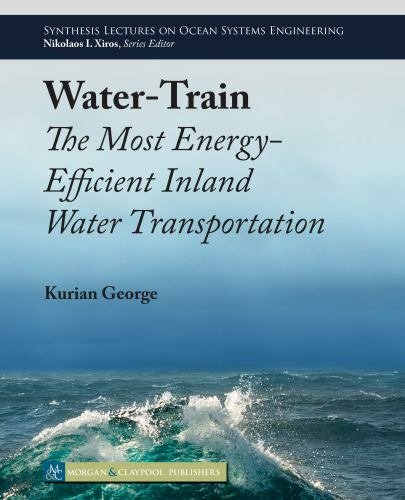
Water-train: The Most Energy-efficient Inland Water Transporta
-
ISBN
-
9781681738475
-
Subject Area
-
Technology & Engineering
-
Publication Name
-
Water-Train : the Most Energy-Efficient Inland Water Transportation
-
Publisher
-
Morgan & Claypool Publishers
-
Item Length
-
9.2 in
-
Subject
-
Environmental / Water Supply, Civil / Transportation, Marine & Naval
-
Publication Year
-
2020
-
Series
-
Synthesis Lectures on Ocean Systems Engineering Ser.
-
Type
-
Textbook
-
Format
-
Hardcover
-
Language
-
English
-
Item Height
-
0.2 in
-
Item Weight
-
12.5 Oz
-
Item Width
-
7.5 in
-
Number of Pages
-
75 Pages
Water-train: The Most Energy-efficient Inland Water Transportation (Synthesis Le
About this product
Product Identifiers
Publisher
Morgan & Claypool Publishers
ISBN-10
1681738473
ISBN-13
9781681738475
eBay Product ID (ePID)
10050410577
Product Key Features
Number of Pages
75 Pages
Language
English
Publication Name
Water-Train : the Most Energy-Efficient Inland Water Transportation
Publication Year
2020
Subject
Environmental / Water Supply, Civil / Transportation, Marine & Naval
Type
Textbook
Subject Area
Technology & Engineering
Series
Synthesis Lectures on Ocean Systems Engineering Ser.
Format
Hardcover
Dimensions
Item Height
0.2 in
Item Weight
12.5 Oz
Item Length
9.2 in
Item Width
7.5 in
Additional Product Features
Intended Audience
Scholarly & Professional
Table Of Content
Series Editor Foreword Acknowledgments Nomenclature and Abbreviations Introduction Energy Efficiency of Conventional Propulsion Systems The Concept of the Water-Train Fabrication and Testing of the Model in the Second Project Conclusion and Future Work Author’s Biography
Synopsis
The use of the Water-Train can curtail, to a large extent, the emission of greenhouse gases thereby decreasing the effect on global warming. Conventional water vehicles use screw propellers which have high reacting energy loss whereas the Water-Train relies on the earth for reaction which is an infinite mass causing no reacting energy loss., In a government-aided research project carried out at Cochin University, the inventor of the Water-Train demonstrated that his invention requires only 24 BTU/ton-km of energy whereas barges use 328 BTU in the same Inland water transportation situation. The use of this Water-Train can invariably curtail, to a large extent, the emission of greenhouse gases thereby decreasing the effect on global warming. Conventional water vehicles use screw propellers which have high reacting energy loss in propulsion whereas the Water-Train relies on the earth for reaction which is an infinite mass causing no reacting energy loss at all. The propelled water takes away a large quantity of kinetic energy (1/22 where its mass is and velocity is ). Water-Train requires a monorail rigidly fixed to the earth through cross arms and pillars for applying the traction/propulsion force. The reacting body is the earth and so the traction efficiency tends toward 100%. It utilizes low friction of water and also the vehicles are connected serially like a locomotive and hence the wave making and skin resistances are also reduced. The NITIE study conducted earlier in India showed that diesel and electric trains use 166.3 BTU and 105.76 BTU, respectively, for the same purpose., In a government-aided research project carried out at Cochin University, the inventor of the Water-Train demonstrated that his invention requires only 24 BTU/ton-km of energy whereas barges use 328 BTU in the same Inland water transportation situation. The use of this Water-Train can invariably curtail, to a large extent, the emission of greenhouse gases thereby decreasing the effect on global warming. Conventional water vehicles use screw propellers which have high reacting energy loss in propulsion whereas the Water-Train relies on the earth for reaction which is an infinite mass causing no reacting energy loss at all. The propelled water takes away a large quantity of kinetic energy (1/2
Price : 40.64
Ends on : N/A
View on eBay