Description

Item specifics
-
Condition
-
GoodA book that has been read but is in good condition. Very minimal damage to the cover including scuff marks, but no holes or tears. The dust jacket for hard covers may not be included. Binding has minimal wear. The majority of pages are undamaged with minimal creasing or tearing, minimal pencil underlining of text, no highlighting of text, no writing in margins. No missing pages. See the seller’s listing for full details and description of any imperfections. See all condition definitionsopens in a new window or tab
-
Seller Notes
-
-
Special Attributes
-
EX-LIBRARY
-
Publication Name
-
Norton & Company, Incorporated, W. W.
-
ISBN
-
9780393248579
-
Book Title
-
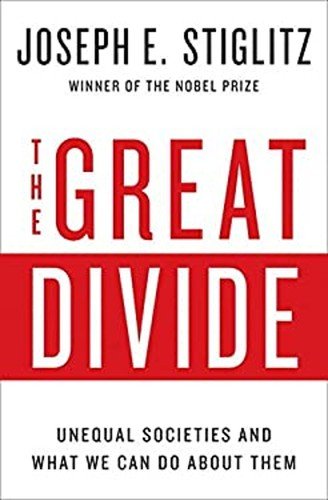
Great Divide : Unequal Societies and What We Can Do about Them
-
Publisher
-
Norton & Company, Incorporated, w. w.
-
Item Length
-
9.5 in
-
Publication Year
-
2015
-
Format
-
Hardcover
-
Language
-
English
-
Item Height
-
1.4 in
-
Genre
-
Social Science, Business & Economics
-
Topic
-
Sociology / General, Economic Conditions, Economics / General
-
Item Weight
-
29.1 Oz
-
Item Width
-
6.5 in
-
Number of Pages
-
384 Pages
The Great Divide : Unequal Societies and What We Can Do about The
About this product
Product Identifiers
Publisher
Norton & Company, Incorporated, w. w.
ISBN-10
0393248577
ISBN-13
9780393248579
eBay Product ID (ePID)
204186846
Product Key Features
Book Title
Great Divide : Unequal Societies and What We Can Do about Them
Number of Pages
384 Pages
Language
English
Topic
Sociology / General, Economic Conditions, Economics / General
Publication Year
2015
Genre
Social Science, Business & Economics
Format
Hardcover
Dimensions
Item Height
1.4 in
Item Weight
29.1 Oz
Item Length
9.5 in
Item Width
6.5 in
Additional Product Features
Intended Audience
Trade
LCCN
2015-006628
TitleLeading
The
Synopsis
In The Great Divide , Joseph E. Stiglitz expands on the diagnosis he offered in his best-selling book The Price of Inequality and suggests ways to counter America’s growing problem. With his signature blend of clarity and passion, Stiglitz argues that inequality is a choice–the cumulative result of unjust policies and misguided priorities. Gathering his writings for popular outlets including Vanity Fair and the New York Times , Stiglitz exposes in full America’s inequality: its dimensions, its causes, and its consequences for the nation and for the world. From Reagan-era to the Great Recession and its long aftermath, Stiglitz delves into the irresponsible policies–deregulation, tax cuts, and tax breaks for the 1 percent–that are leaving many Americans farther and farther beyond and turning the American dream into an ever more unachievable myth. With formidable yet accessible economic insight, he urges us to embrace real solutions: increasing taxes on corporations and the wealthy; offering more help to the children of the poor; investing in education, science, and infrastructure; helping out homeowners instead of banks; and, most importantly, doing more to restore the economy to full employment. Stiglitz also draws lessons from Scandinavia, Singapore, and Japan, and he argues against the tide of unnecessary, destructive austerity that is sweeping across Europe. Ultimately, Stiglitz believes our choice is not between growth and fairness; with the right policies, we can choose both. His complaint is not so much about capitalism as such, but how twenty-first-century capitalism has been perverted. His is a call to confront America’s economic inequality as the political and moral issue that it is. If we reinvest in people and pursue the other policies that he describes, America can live up to the shared dream of a more prosperous, more equal society., In the face of rising inequality in America, Joseph E. Stiglitzcharts a path toward real recovery and a more equal society. A singular voice of reason in an era defined by bitter politics and economic uncertainty, Joseph E. Stiglitz has time and again diagnosed America’s greatest economic challenges, from the Great Recession and its feeble recovery to the yawning gap between the rich and the poor. The Great Divide gathers his most provocative reflections to date on the subject of inequality. As Stiglitz ably argues, a healthy economy and a fairer democracy are within our grasp if we can put aside misguided interests and ideologies and abandon failed policies. Opening with the essay that gave the Occupy Movement its slogan, “We are the 99%,” later essays in The Great Divide reveal equality of opportunity as a national myth, show that today’s outsized inequality is a matter of choice, and explain reforms that would spur higher growth, more opportunity, and greater equality.
LC Classification Number
HC110.I5S8667 2015
Price : 6.72
Ends on : N/A
View on eBay


