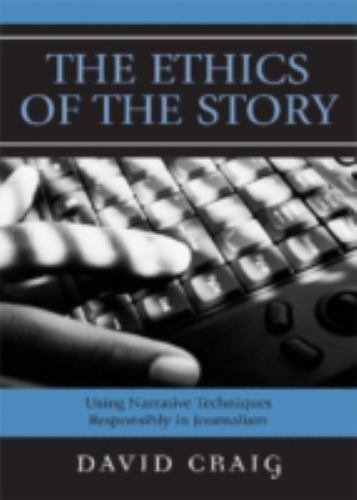
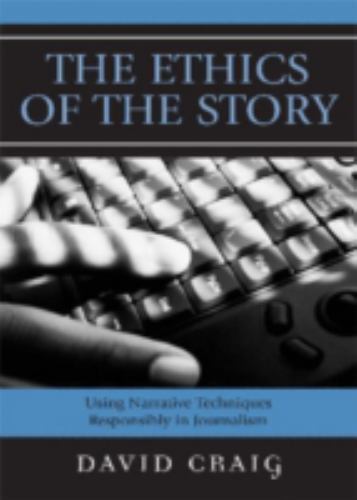
Ethics of the Story: Using Narrative Techniques Responsibly in Journalism

$16.08

Item specifics

Condition
Very Good

A book that does not look new and has been read but is in excellent condition. No obvious damage to the cover, with the dust jacket (if applicable) included for hard covers. No missing or damaged pages, no creases or tears, and no underlining/highlighting of text or writing in the margins. May be very minimal identifying marks on the inside cover. Very minimal wear and tear. See the seller’s listing for full details and description of any imperfections. See all condition definitionsopens in a new window or tab

Seller Notes
“May have limited writing in cover pages. Pages are unmarked. ~ ThriftBooks: Read More, Spend …

Binding
Paperback
Weight
0 lbs
Product Group
Book
IsTextBook
No
ISBN
9780742537774
Book Title
Ethics of the Story : Using Narrative Techniques Responsibly in Journalism
Publisher
Rowman & Littlefield Publishers, Incorporated
Item Length
9 in
Publication Year
2006
Format
Perfect
Language
English
Item Height
0.5 in
Author
David Craig
Genre
Social Science, Language Arts & Disciplines, Business & Economics
Topic
Media Studies, Business Ethics, Journalism
Item Weight
10.9 Oz
Item Width
6 in
Number of Pages
226 Pages

Ethics of the Story: Using Narrative Techniques Responsibly in Journalism

About this product

Product Identifiers

Publisher
Rowman & Littlefield Publishers, Incorporated
ISBN-10
0742537773
ISBN-13
9780742537774
eBay Product ID (ePID)
57077547

Product Key Features

Book Title
Ethics of the Story : Using Narrative Techniques Responsibly in Journalism
Number of Pages
226 Pages
Language
English
Topic
Media Studies, Business Ethics, Journalism
Publication Year
2006
Genre
Social Science, Language Arts & Disciplines, Business & Economics
Author
David Craig
Format
Perfect

Dimensions

Item Height
0.5 in
Item Weight
10.9 Oz
Item Length
9 in
Item Width
6 in

Additional Product Features

Intended Audience
Trade
LCCN
2006-036694
TitleLeading
The
Dewey Edition
22
Reviews
“Arguing that powerful forces tempt journalists to stray from the best possible version of the truth, Craig devotes chapters to storytelling with anecdotes; how description and attribution can lead to a perceived bias or confusion over the source of the information; how to quote and when paraphrasing is acceptable; choosing words, assigning labels, and the inevitability of bias; the dangers of interpreting and analyzing the story; and the choice and dangers of voice….Recommended.” — Choice Reviews “David Craig makes an important contribution to the study of media ethics. He reminds us that all stories have moral dimensions; that the best journalists tell stories with care in the public interest; and that good or bad can come from the choice of a single word.” –Roy Peter Clark, Poynter Institute for Media Studies; author, Writing Tools: 50 Essential Strategies for Every Writer, Arguing that powerful forces tempt journalists to stray from the best possible version of the truth, Craig devotes chapters to storytelling with anecdotes; how description and attribution can lead to a perceived bias or confusion over the source of the information; how to quote and when paraphrasing is acceptable; choosing words, assigning labels, and the inevitability of bias; the dangers of interpreting and analyzing the story; and the choice and dangers of voice….Recommended., David Craig makes an important contribution to the study of media ethics. He reminds us that all stories have moral dimensions; that the best journalists tell stories with care in the public interest; and that good or bad can come from the choice of a single word.
Dewey Decimal
174/.9097
Table Of Content
Chapter 1 Introduction: Ethics Paragraph by Paragraph Chapter 2 1 The Power and Ethics of the Story Chapter 3 2 Anecdotes Chapter 4 3 Description and Attribution Chapter 5 4 Quotes and Paraphrasing Chapter 6 5 Word Choice, Labeling, and Bias Chapter 7 6 Interpretation and Analysis Chapter 8 7 Voice Chapter 9 8 The Big Picture Chapter 10 References
Synopsis
The best journalists are masters at their craft. With a comma and a colon, a vivid verb and a colorful adjective, they not only convey important information but also create a sense of place and evoke powerful emotions. A compelling story can shape–for good or ill–the way a reader understands people, events, and issues. The Ethics of the Story examines the ethical implications of narrative techniques commonly used in journalism, not just literary journalism but also news and feature writing. The book draws on interviews with 60 talented journalists, including Pulitzer Prize winners, to offer practical advice about ethical choices in writing and editing., The best journalists are masters at their craft. With a comma and a colon, a vivid verb and a colorful adjective, they not only convey important information but also create a sense of place and evoke powerful emotions. A compelling story can shape_for good or ill_the way a reader understands people, events, and issues. The Ethics of the Story examines the ethical implications of narrative techniques commonly used in journalism, not just literary journalism but also news and feature writing. The book draws on interviews with 60 talented journalists, including Pulitzer Prize winners, to offer practical advice about ethical choices in writing and editing. Much has been written about journalism ethics, but the discussion has often focused on spectacularly bad decisions_such as Jayson BlairOs and Jack KelleyOs use of fraudulent narrative_rather than the ethical dimension of day-to-day choices about the building blocks of journalistic storytelling. The Ethics of the Story fills a gap in current work on ethics, writing, and editing. It will enlighten any serious wordsmith with a story to tell., The best journalists are masters at their craft. With a comma and a colon, a vivid verb and a colorful adjective, they not only convey important information but also create a sense of place and evoke powerful emotions. A compelling story can shape-for good or ill-the way a reader understands people, events, and issues. The Ethics of the Story examines the ethical implications of narrative techniques commonly used in journalism, not just literary journalism but also news and feature writing. The book draws on interviews with 60 talented journalists, including Pulitzer Prize winners, to offer practical advice about ethical choices in writing and editing., The best journalists are masters at their craft. With a comma and a colon, a vivid verb and a colorful adjective, they not only convey important information but also create a sense of place and evoke powerful emotions. A compelling story can shape for good or ill the way a reader understands people, events, and issues. The Ethics of the Story examines the ethical implications of narrative techniques commonly used in journalism, not just literary journalism but also news and feature writing. The book draws on interviews with 60 talented journalists, including Pulitzer Prize winners, to offer practical advice about ethical choices in writing and editing., The best journalists are masters at their craft. With a comma and a colon, a vivid verb and a colorful adjective, they not only convey important information but also create a sense of place and evoke powerful emotions. A compelling story can shape–for good or ill–the way a reader understands people, events, and issues. The Ethics of the Story examines the ethical implications of narrative techniques commonly used in journalism, not just literary journalism but also news and feature writing. The book draws on interviews with 60 talented journalists, including Pulitzer Prize winners, to offer practical advice about ethical choices in writing and editing. Much has been written about journalism ethics, but the discussion has often focused on spectacularly bad decisions–such as Jayson Blair’s and Jack Kelley’s use of fraudulent narrative–rather than the ethical dimension of day-to-day choices about the building blocks of journalistic storytelling. The Ethics of the Story fills a gap in current work on ethics, writing, and editing. It will enlighten any serious wordsmith with a story to tell.
LC Classification Number
PN4756.C69 2007

Description


Item specifics

Condition
Very Good

A book that does not look new and has been read but is in excellent condition. No obvious damage to the cover, with the dust jacket (if applicable) included for hard covers. No missing or damaged pages, no creases or tears, and no underlining/highlighting of text or writing in the margins. May be very minimal identifying marks on the inside cover. Very minimal wear and tear. See the seller’s listing for full details and description of any imperfections. See all condition definitionsopens in a new window or tab

Seller Notes
“May have limited writing in cover pages. Pages are unmarked. ~ ThriftBooks: Read More, Spend …

Binding
Paperback
Weight
0 lbs
Product Group
Book
IsTextBook
No
ISBN
9780742537774
Book Title
Ethics of the Story : Using Narrative Techniques Responsibly in Journalism
Publisher
Rowman & Littlefield Publishers, Incorporated
Item Length
9 in
Publication Year
2006
Format
Perfect
Language
English
Item Height
0.5 in
Author
David Craig
Genre
Social Science, Language Arts & Disciplines, Business & Economics
Topic
Media Studies, Business Ethics, Journalism
Item Weight
10.9 Oz
Item Width
6 in
Number of Pages
226 Pages

Ethics of the Story: Using Narrative Techniques Responsibly in Journalism

About this product

Product Identifiers

Publisher
Rowman & Littlefield Publishers, Incorporated
ISBN-10
0742537773
ISBN-13
9780742537774
eBay Product ID (ePID)
57077547

Product Key Features

Book Title
Ethics of the Story : Using Narrative Techniques Responsibly in Journalism
Number of Pages
226 Pages
Language
English
Topic
Media Studies, Business Ethics, Journalism
Publication Year
2006
Genre
Social Science, Language Arts & Disciplines, Business & Economics
Author
David Craig
Format
Perfect

Dimensions

Item Height
0.5 in
Item Weight
10.9 Oz
Item Length
9 in
Item Width
6 in

Additional Product Features

Intended Audience
Trade
LCCN
2006-036694
TitleLeading
The
Dewey Edition
22
Reviews
“Arguing that powerful forces tempt journalists to stray from the best possible version of the truth, Craig devotes chapters to storytelling with anecdotes; how description and attribution can lead to a perceived bias or confusion over the source of the information; how to quote and when paraphrasing is acceptable; choosing words, assigning labels, and the inevitability of bias; the dangers of interpreting and analyzing the story; and the choice and dangers of voice….Recommended.” — Choice Reviews “David Craig makes an important contribution to the study of media ethics. He reminds us that all stories have moral dimensions; that the best journalists tell stories with care in the public interest; and that good or bad can come from the choice of a single word.” –Roy Peter Clark, Poynter Institute for Media Studies; author, Writing Tools: 50 Essential Strategies for Every Writer, Arguing that powerful forces tempt journalists to stray from the best possible version of the truth, Craig devotes chapters to storytelling with anecdotes; how description and attribution can lead to a perceived bias or confusion over the source of the information; how to quote and when paraphrasing is acceptable; choosing words, assigning labels, and the inevitability of bias; the dangers of interpreting and analyzing the story; and the choice and dangers of voice….Recommended., David Craig makes an important contribution to the study of media ethics. He reminds us that all stories have moral dimensions; that the best journalists tell stories with care in the public interest; and that good or bad can come from the choice of a single word.
Dewey Decimal
174/.9097
Table Of Content
Chapter 1 Introduction: Ethics Paragraph by Paragraph Chapter 2 1 The Power and Ethics of the Story Chapter 3 2 Anecdotes Chapter 4 3 Description and Attribution Chapter 5 4 Quotes and Paraphrasing Chapter 6 5 Word Choice, Labeling, and Bias Chapter 7 6 Interpretation and Analysis Chapter 8 7 Voice Chapter 9 8 The Big Picture Chapter 10 References
Synopsis
The best journalists are masters at their craft. With a comma and a colon, a vivid verb and a colorful adjective, they not only convey important information but also create a sense of place and evoke powerful emotions. A compelling story can shape–for good or ill–the way a reader understands people, events, and issues. The Ethics of the Story examines the ethical implications of narrative techniques commonly used in journalism, not just literary journalism but also news and feature writing. The book draws on interviews with 60 talented journalists, including Pulitzer Prize winners, to offer practical advice about ethical choices in writing and editing., The best journalists are masters at their craft. With a comma and a colon, a vivid verb and a colorful adjective, they not only convey important information but also create a sense of place and evoke powerful emotions. A compelling story can shape_for good or ill_the way a reader understands people, events, and issues. The Ethics of the Story examines the ethical implications of narrative techniques commonly used in journalism, not just literary journalism but also news and feature writing. The book draws on interviews with 60 talented journalists, including Pulitzer Prize winners, to offer practical advice about ethical choices in writing and editing. Much has been written about journalism ethics, but the discussion has often focused on spectacularly bad decisions_such as Jayson BlairOs and Jack KelleyOs use of fraudulent narrative_rather than the ethical dimension of day-to-day choices about the building blocks of journalistic storytelling. The Ethics of the Story fills a gap in current work on ethics, writing, and editing. It will enlighten any serious wordsmith with a story to tell., The best journalists are masters at their craft. With a comma and a colon, a vivid verb and a colorful adjective, they not only convey important information but also create a sense of place and evoke powerful emotions. A compelling story can shape-for good or ill-the way a reader understands people, events, and issues. The Ethics of the Story examines the ethical implications of narrative techniques commonly used in journalism, not just literary journalism but also news and feature writing. The book draws on interviews with 60 talented journalists, including Pulitzer Prize winners, to offer practical advice about ethical choices in writing and editing., The best journalists are masters at their craft. With a comma and a colon, a vivid verb and a colorful adjective, they not only convey important information but also create a sense of place and evoke powerful emotions. A compelling story can shape for good or ill the way a reader understands people, events, and issues. The Ethics of the Story examines the ethical implications of narrative techniques commonly used in journalism, not just literary journalism but also news and feature writing. The book draws on interviews with 60 talented journalists, including Pulitzer Prize winners, to offer practical advice about ethical choices in writing and editing., The best journalists are masters at their craft. With a comma and a colon, a vivid verb and a colorful adjective, they not only convey important information but also create a sense of place and evoke powerful emotions. A compelling story can shape–for good or ill–the way a reader understands people, events, and issues. The Ethics of the Story examines the ethical implications of narrative techniques commonly used in journalism, not just literary journalism but also news and feature writing. The book draws on interviews with 60 talented journalists, including Pulitzer Prize winners, to offer practical advice about ethical choices in writing and editing. Much has been written about journalism ethics, but the discussion has often focused on spectacularly bad decisions–such as Jayson Blair’s and Jack Kelley’s use of fraudulent narrative–rather than the ethical dimension of day-to-day choices about the building blocks of journalistic storytelling. The Ethics of the Story fills a gap in current work on ethics, writing, and editing. It will enlighten any serious wordsmith with a story to tell.
LC Classification Number
PN4756.C69 2007

Price : 16.08

Ends on : N/A

View on eBay

We use cookies to ensure that we give you the best experience on our website.